
Machine basics · 6 min read
Sweeper vs scrubber: which machine does your floor actually need?
The two machines look related, and callers mix them up every week. They do completely different jobs, and hiring the wrong one is the most common and most expensive mistake on a first hire.
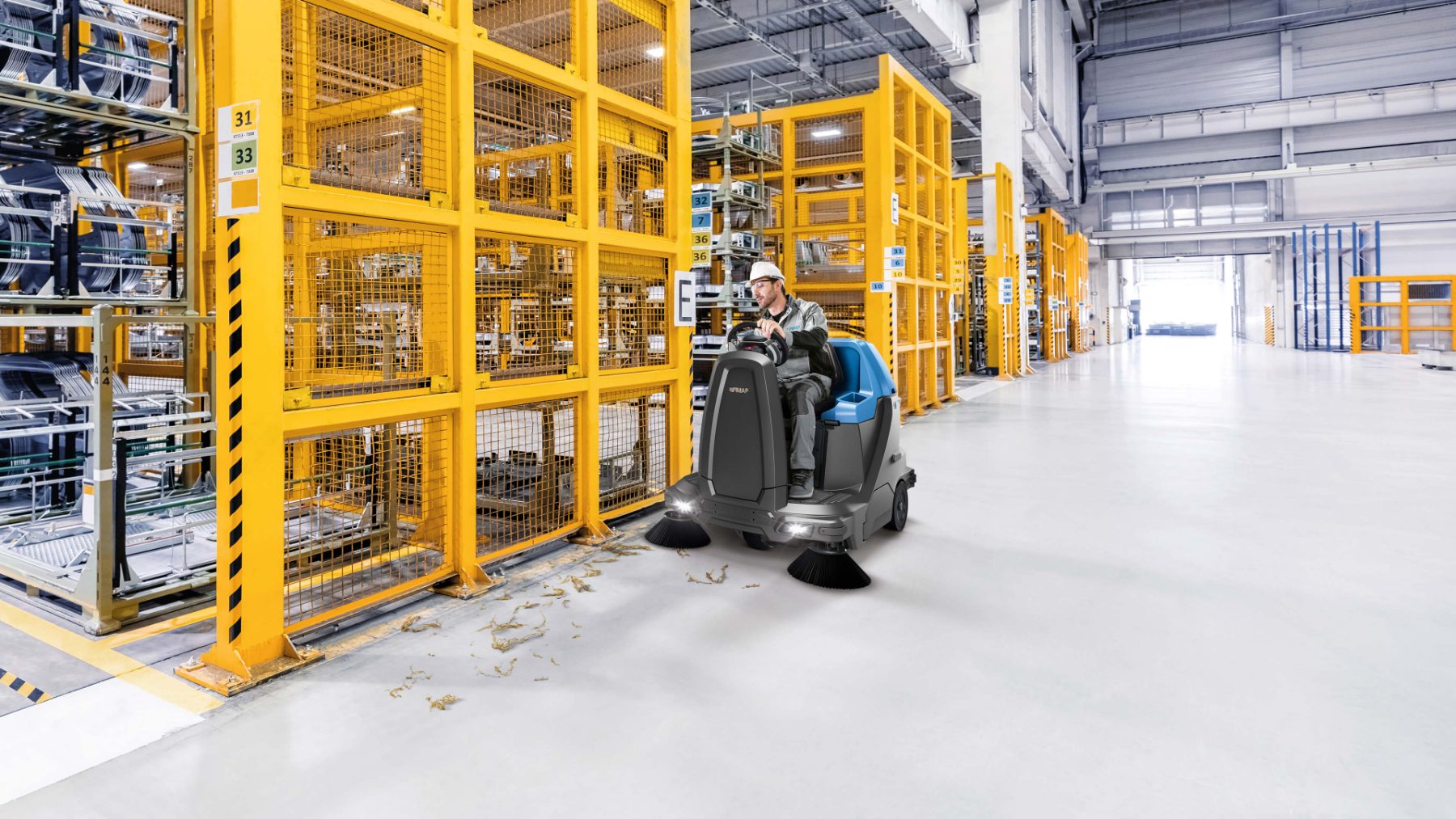
What a sweeper does
A sweeper is a dry machine. A cylindrical or side brush flicks debris into a hopper while a fan pulls air through a filter, capturing the fine dust the brushes kick up. Nothing is wet, nothing is chemically cleaned, and nothing needs to dry afterwards.
That makes sweepers the right choice for anything loose: grit, sand, swarf, offcuts, pallet splinters, leaves, packaging waste, cement fines. On a construction or industrial floor, this is most of what is actually there.
What a scrubber does
A scrubber is a wet machine working three motions at once: water and detergent go down, brushes or pads agitate the surface, and a rear squeegee and vacuum lift the dirty solution back out. The floor is left damp, not wet, and is usually walkable within minutes.
Scrubbers remove what is stuck to the floor rather than sitting on it — grease film, tyre marks, spilled product, biological soil, traffic grime. They restore appearance and reduce slip risk, which is why they dominate food, health and retail environments.
Running a scrubber on a debris-covered floor
This is the classic error. If loose debris is still on the floor, a scrubber turns it into slurry, drags it under the pad and packs it into the recovery tank and hoses. The result is a streaked floor, a blocked machine, and a squeegee that stops sealing.
The order matters: sweep first, scrub second. On sites with both needs we frequently hire out a sweeper and a scrubber together, or a combination machine where the area justifies it.
Deciding in one minute
Walk the floor and ask what you would remove with your hands. If you would pick it up or push it into a pile, you need a sweeper. If you would need a mop, a chemical and some pressure, you need a scrubber. If you would do both, hire both — it is almost always faster and cheaper than forcing one machine to do the other's job.
| Condition on the floor | Machine | Why |
|---|---|---|
| Grit, sand, dust, packaging waste | Sweeper | Dry pick-up into a hopper with filtered airflow |
| Grease film, tyre marks, product spill | Scrubber | Water, detergent and mechanical agitation |
| Standing water, slurry | Industrial vacuum | Wet pick-up with squeegee bar and drain tank |
| Dull but clean sealed floor | Single-disc floor machine | Polishing and burnishing, not soil removal |
| Debris plus ground-in soil | Sweeper, then scrubber | Sweeping first protects the scrubber and the finish |