
Health & compliance · 8 min read
Dust control: the part of sweeping that matters most
Fast, efficient removal of fine dust from your work environment is vital to provide a healthy workplace and to deliver products free of contaminants. It is also the part of a machine specification that is easiest to get wrong.
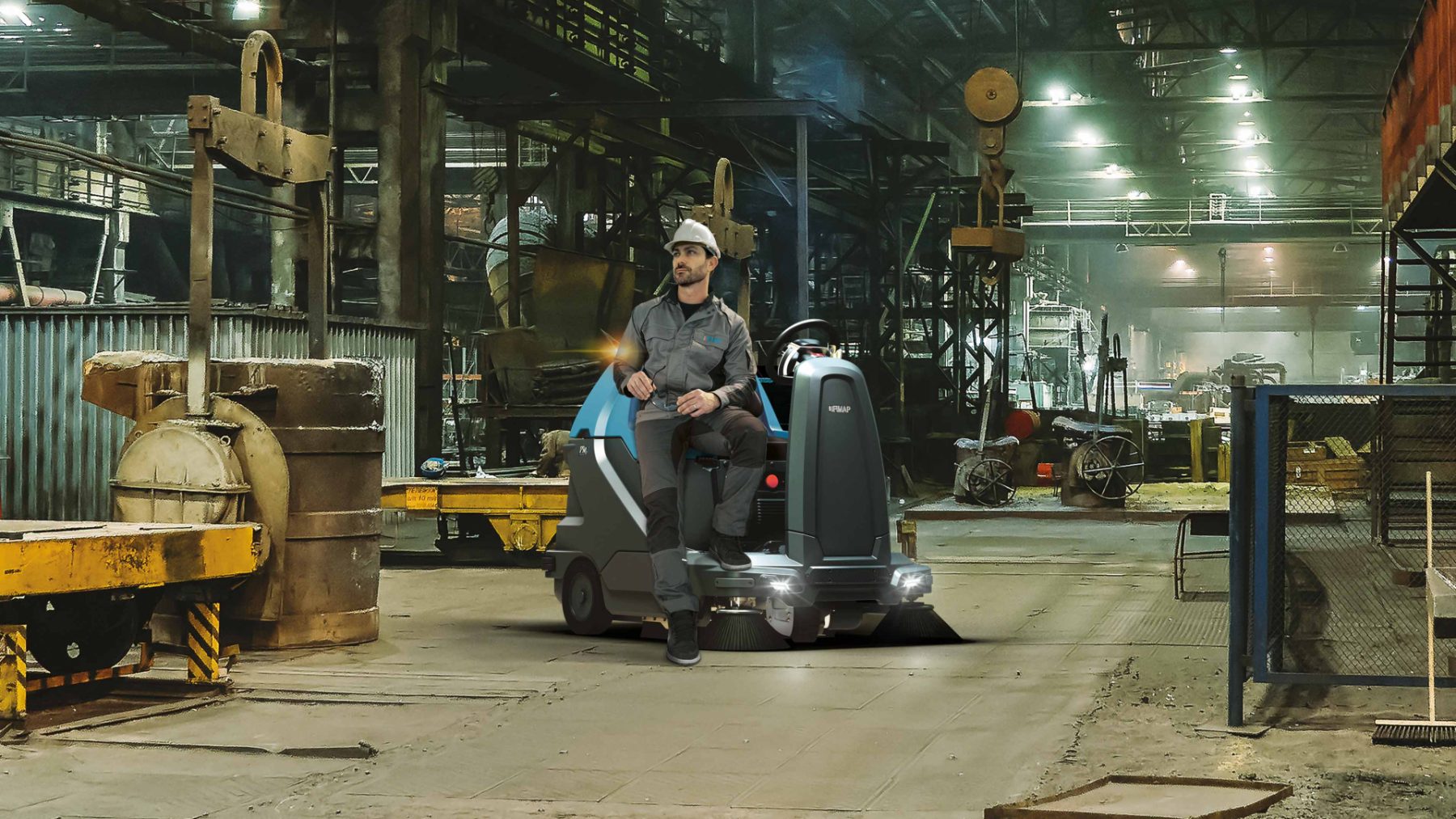
The dust you can see is not the problem
Visible dust settles. The fraction that matters is respirable — small enough to stay airborne for hours and to reach deep into the lungs. Cutting, grinding, coring and demolition of concrete, brick, tile and engineered stone all generate respirable crystalline silica, which is a recognised occupational hazard with strict Australian workplace exposure limits.
Dry sweeping with an unfiltered or poorly filtered machine can make the situation worse: the brush re-suspends settled fines and the exhaust air distributes them across the site.
This is general guidance, not compliance advice. Your obligations depend on the material, the task and current work health and safety regulation — check the applicable Safe Work Australia and Queensland requirements for your site, and treat the machine as one control among several.
How filtration works on our machines
On a sweeper, the fan draws hopper air through a filter before exhausting it. Filter area and filter media decide how much fine dust is captured and how long the machine holds its airflow. Panel filters are adequate for general debris; they load quickly in powder.
With sweepers that can be fitted with sock-type filters we can offer a superior dust control element that assists both the operator and the environment, working longer and more efficiently to keep your site clean and dust free. The socks present far greater surface area, so airflow — and therefore both pick-up and containment — holds up in conditions that would blind a panel filter within minutes.
When a vacuum beats a sweeper
For dust generated at a point — a saw, a grinder, a core drill, a transfer chute — capture at source with an industrial vacuum is far more effective than cleaning up afterwards. Wet and dry industrial vacuums also handle the slurry that wet cutting produces, which no sweeper can touch.
In practice the best sites use both: capture at source during the work, then a filtered sweep at the end of the shift to lift what escaped.
| Task | Primary control | Machine |
|---|---|---|
| Concrete cutting or grinding, dry | Capture at source | Industrial vacuum, sock-filtered sweeper after |
| Wet cutting or coring | Slurry recovery | Wet and dry industrial vacuum |
| Demolition fines and rubble | Scheduled filtered sweeping | Ride-on sweeper with sock filters |
| Flour, sugar and powder handling | Containment and frequent sweeping | Sock-filtered sweeper, vacuum for spills |
| Tracked mud onto a public road | Road sweeping | Road sweeper truck, wet or dry hire |
Practical habits that make a measurable difference
Pulse or shake the filter at the specified interval and empty the hopper before it packs. Keep hopper seals and gaskets intact — a leaking seal defeats good filter media. Sweep before debris is crushed into powder by traffic, because uncrushed material is far easier to capture. And schedule sweeping rather than reacting once the site is visibly dirty.